The steps, in order
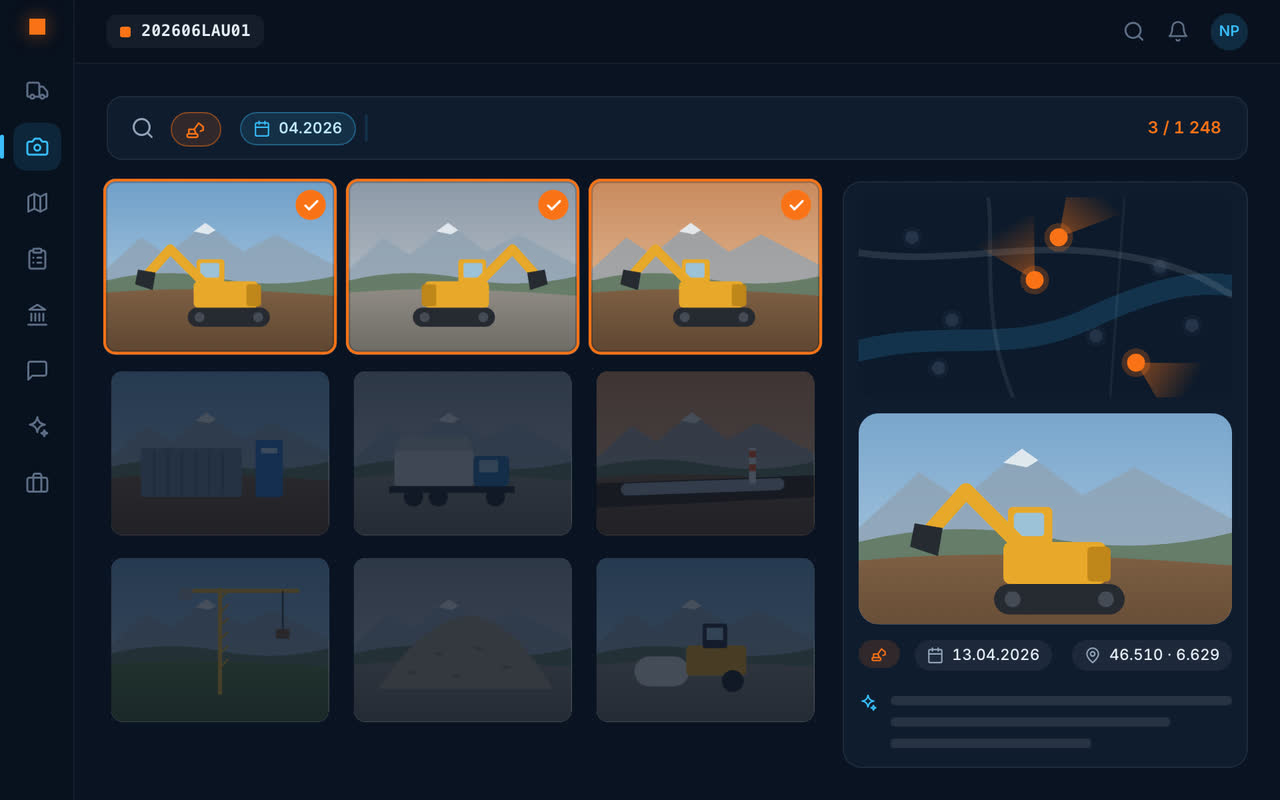
1. Photos
Every photo dated, located and filed by site: the first gain, with no effort.
2. Tickets
Disposal and weighbridge tickets photographed and read by AI: no more re-typing.
3. Hours
Logged on the phone, against the right site, rather than on Friday timesheets.
4. Communication
One conversation per site, instead of WhatsApp groups.
5. Quotes and invoices
Once the site team is on board, the office invoices what was recorded, with the QR-bill.
The pitfalls
Changing everything at once; choosing the office's tool without asking the site; forgetting about data export; leaving information scattered across emails, WhatsApp and binders. One step at a time, with a pilot team, works better than a big launch.
Then there is the data question: where is it hosted, who processes it, how do you get it back. A Swiss SME must be able to answer under the revFADP.
An example: a twelve-person civil engineering firm
First month, photos and disposal tickets: drivers photograph their tickets and the office no longer re-types them. Second month, hours on the phone. Third month, site messaging replaces the WhatsApp groups. Only then do quotes and invoices move into the same tool.
Frequently asked questions
Where should a construction company start its digitalisation?
With what the site already does: taking photos. Then tickets, hours and communication; quotes and invoices last, once the site team is on board.
How long does it take?
A few weeks per step with a pilot team. Better to move step by step than to impose everything at once.
Do teams need training?
As little as possible: the tool should be picked up on site, by taking photos. That is the first selection criterion.