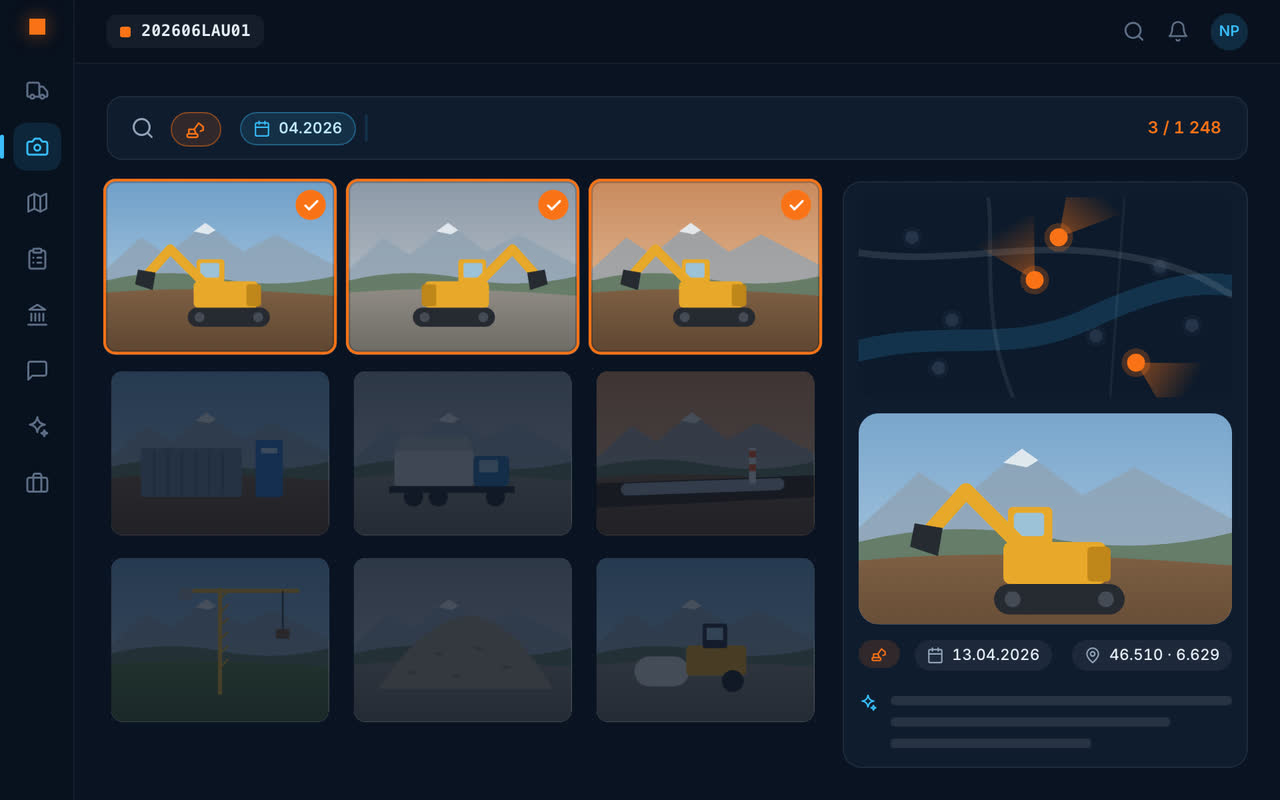
A day's entries
Date and weather
The weather explains a delay, protected concrete, a day stopped: note it every morning.
Workforce
Who was on site, from which company, and for how many hours.
Plant
The machines on site and their hours of use.
Work carried out
What was done, where, and progress against what was planned.
Deliveries and removals
What arrived and what left, with the delivery notes and disposal or weighbridge tickets.
Events
Incidents, defects discovered, accidents, interruptions.
Instructions received
What the site supervision or the client asked for, and when.
Visits
Who came by: inspections, meetings, checks.
Diary, report, time-and-materials report: three different documents
The diary records everything, every day, for the record. The site report summarises a period for someone — the client, the site supervision. The time-and-materials report, for its part, describes work paid by time spent and gets signed. All three draw on the same facts, but none replaces the others.
What Geovio fills in for you, and what you still have to write
Filled in as the day goes on
Dated, located photos, disposal and weighbridge tickets read by AI, hours logged by each person, the site conversation.
To write yourself
The weather, instructions received, visits and your own assessment: a few lines, which the site conversation can keep.
The summary of the period
When you have to report back, the site report is written from the chosen photos.
Frequently asked questions
What should a construction site diary contain?
The date and weather, workforce, plant, work carried out, deliveries and removals, events, instructions received and visits.
What is the difference between a site diary and a site report?
The diary records everything, every day, for the record; the report summarises a period for a recipient, such as the client.
Does Geovio fill in the diary on its own?
Partly: photos, tickets, hours and messages file themselves; the weather, instructions and visits still have to be noted.